Over the span of four consecutive nights in July 2026, 151,000 fans of Noah Kahan gathered for concerts at Boston’s Fenway Park and sang the following line in unison each night: “I’m mean because I grew up in New England!” This lyric, from Kahan’s song “Homesick,” off his 2022 album Stick Season, resonates in a surprising way with New Englanders. Why would so many of his fans in New England’s largest and oldest city—assembled in one of its most storied and folkloric landmarks—so enthusiastically proclaim their “meanness?” Why did New England make them mean? Are they actually mean?
In Noah Kahan: Out of Body, the 2026 Netflix documentary about Kahan’s life and career, a neighbor of Kahan’s from Strafford, Vermont ponders this lyric, reflecting that she doesn’t think she’s mean. Nor, she asserts, is Noah. Yet she pauses and looks pensively into the distance, suggesting that perhaps the sentiment invites deeper consideration than she first admits. I related to this moment. I’m from there, too. I grew up in Maine, across some mountain ranges and 180 miles to the east. Kahan’s neighbor is not wrong to stop here and reflect. On the surface, we might assume she is upset by the presumption that she’s “mean” by virtue of where she lives. But the bigger question, this moment asks, is why Kahan would make such a provocative connection in the first place.
The truth behind this lyric, I think, resides some 400 years in the past, with the very founding of New England by an austere group of English colonists we know as the Puritans. At first glance, the mostly secular Kahan seems to have little linkage to the Puritans (reformed Christians, influenced by the French theologian John Calvin, who sought to escape the politics and doctrines of the Church of England in the early 1600s). Yet the cultural history of New England tells a more complex story.
In early New England, citizens were expected to shape intense feelings and emotions into expressions that were suitable for the stability and uniformity of their new—and very fragile—society. They were asked to sympathize with one another, to practice “fellow-feeling” that would yield shared social responsibility and understanding. It was part biblical belief and part political pragmatism. But it limited what they could say, and how they could say it.
Life in New England was not easy. The landscape was unfamiliar, the climate was harsh, and the pressure to conform to social convention was urgent. The Puritans presumed they were on a divine mission. The consequences were significant: fail the mission, and fail God. Anyone who’s ever read Nathaniel Hawthorne’s Scarlett Letter or Arthur Miller’s Crucible might recall the extent to which New England was, so to speak, a social pressure-cooker.
The Puritans colonized lands inhabited by indigenous Algonquian peoples. Adding to their own internal angsts, they became involved in violent political conflicts with Native Americans throughout the 1600s. By the end of the century, anxiety had become so intense that the infamous Salem Witch Trials led the Puritans to execute 20 of their neighbors. Five more died in prison, while some 200 were tried for witchcraft. There were, of course, no witches. Instead, suspicion and mass hysteria—resulting from what some historians see as repressed emotion—had taken hold of Massachusetts.
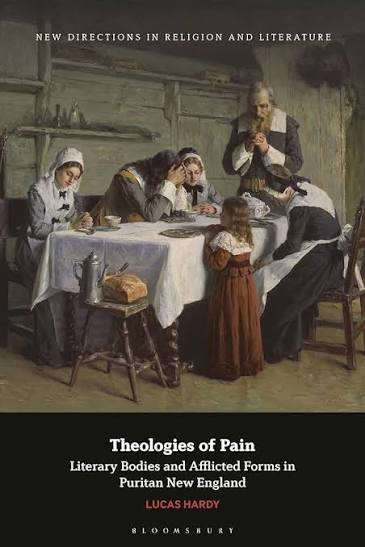
So how does all of this relate to Noah Kahan? Maybe it’s already obvious. As the pressures of life in Puritan New England increased with time, both church and state (separate but closely-linked entities) became the custodians of emotion and feeling. Pain and pleasure had to be expressed through what, in my book Theologies of Pain, I describe as a “doctrine of affliction”—a language of feeling exclusive to the Puritan “elect,” or the most upstanding members of society. To express thoughts or feelings outside of this rhetorical formula (to talk too openly about one’s unique physical or emotional pain or joy) was to be cast out of society. Those unwilling to conform could be punished by banishment from the community…or worse.